Were you injured in a scuba diving accident in Long Beach? Contact the top Long Beach scuba diving accident lawyer to seek compensation.
Long Beach’s coastal waters attract thousands of recreational and commercial divers each year, from those exploring Catalina’s kelp forests to professionals maintaining offshore platforms and harbor structures. Every diver depends on proper training, reliable equipment, and safe dive practices. But underwater environments present sudden and unique dangers that can turn a routine dive into a catastrophic emergency.
Scuba diving accidents involve a complex mix of federal maritime law, California regulations, and industry-specific safety standards that most personal injury attorneys are not equipped to handle. Whether you were injured on a recreational charter or while working as a commercial diver, your case may involve questions of admiralty jurisdiction, vessel liability, equipment failure, operator negligence, or unsafe diving practices. Dive operators and insurance companies often respond immediately with maritime attorneys focused on protecting their interests.
The Law Offices of Charles D. Naylor provides the specialized representation you need to level the playing field. With deep experience in maritime injury law, the firm understands how to investigate dive accidents, identify responsible parties, and pursue full compensation under the appropriate legal framework.Contact us today for a free consultation and discover how we can help you seek the compensation and justice you deserve.
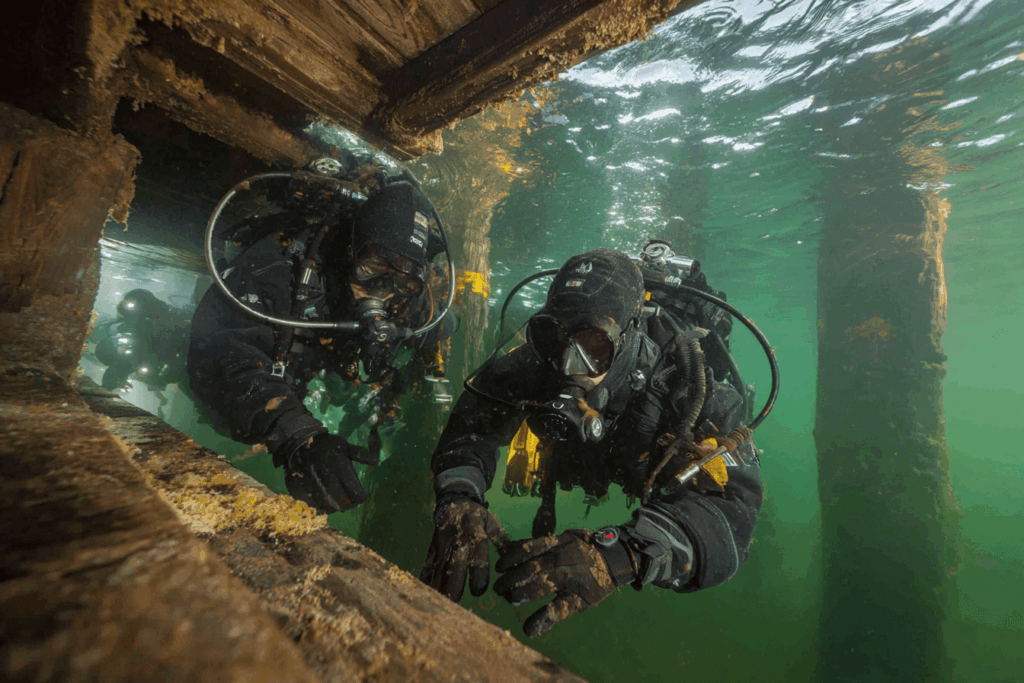
How the Law Offices of Charles D. Naylor Help Scuba Diving Accident Victims in Long Beach, CA
The Law Offices of Charles D. Naylor are located in Long Beach, California, at the center of the Port of Los Angeles and Port of Long Beach. Our firm has extensive experience as maritime attorneys, representing injured divers and helping them obtain the compensation they deserve.
When you suffer a diving accident, you face complex maritime laws that general personal injury lawyers cannot handle effectively. We investigate your accident thoroughly, handle aggressive insurance companies, pursue maximum compensation, and protect you from waiver defenses that dive operators commonly use.
Our services include immediate accident scene investigation, expert analysis of dive profiles and equipment, coordination of medical expert testimony, and aggressive negotiation with maritime insurers. We represent clients in federal admiralty court when necessary to secure the justice you deserve.
Why You Need the Top Long Beach Scuba Diving Accident Lawyer
Scuba diving accidents involve federal admiralty jurisdiction, Jones Act protections, and LHWCA coverage that require specialized legal knowledge. General personal injury attorneys lack the maritime law experience needed to navigate these complex cases effectively.
Dive operators and their insurance companies employ specialized maritime lawyers who know every defense strategy. You need a Long Beach scuba diving accident attorney who understands the unique challenges of underwater accidents and can counter their tactics.
We focus exclusively on maritime law cases, giving us the expertise to identify all liable parties and pursue every available remedy. Our Long Beach location puts us at the heart of Southern California’s diving industry, where we understand local conditions and operators.
Compensation Available to Scuba Diving Accident Victims
Maritime law provides broader compensation opportunities than standard personal injury claims. You may recover damages that extend beyond typical state law remedies.
Medical expenses include current and future treatment costs, hyperbaric chamber therapy, specialized dive medicine consultations, surgery, and long-term rehabilitation. Lost wages cover time off work and reduced earning capacity if your injuries prevent you from returning to your previous employment.
Pain and suffering compensation addresses both physical trauma and emotional distress caused by the accident. Wrongful death damages for families include funeral expenses, loss of financial support, and loss of companionship.
Settlement amounts vary based on injury severity and circumstances, but maritime law often allows for greater recovery than land-based accidents. We evaluate every aspect of your damages to ensure you receive full compensation for your losses.
Who Is Liable for a Scuba Diving Accident?
Multiple parties often share responsibility for diving accidents, and identifying all liable defendants is crucial for maximum recovery. Our investigation process examines every aspect of your dive to determine the fault.
Dive operators and charter companies can be liable for inadequate safety protocols, poor equipment maintenance, or failure to monitor weather conditions. Boat captains and crew members may be responsible for propeller strikes, failure to maintain proper lookouts, or navigational errors.
Equipment manufacturers may be held liable for defective regulators, faulty tanks, or malfunctioning buoyancy control devices. Training agencies and instructors can be held responsible for inadequate certification, poor supervision, or teaching beyond safe limits.
Other divers may be liable for violations of the buddy system or reckless behavior that endangers fellow divers. We pursue all responsible parties to ensure you receive compensation from every available source.
What Counts as a Scuba or Dive Boat Accident Under Maritime Law?
Maritime jurisdiction applies to accidents occurring on navigable waters, including incidents involving dive boats or shore excursions booked through vessels. This includes accidents at Catalina Island, the Channel Islands, and offshore oil platforms.
Specific scenarios that qualify include boat strikes while divers are in the water, equipment failures during dives, decompression injuries from improper ascent procedures, and drowning incidents during supervised dives. Shore excursions that involve water activities typically fall under maritime law when booked through cruise ships or dive operators.
The location of your accident determines which laws apply and which courts have jurisdiction. We analyze your case to ensure we file in the proper venue and apply the most favorable legal framework.
What Causes Diving Accidents in Southern California?
Long Beach and the surrounding waters present unique hazards that require experienced operators and proper safety protocols. Many accidents result from preventable negligence by dive professionals or equipment providers.
Boat propeller strikes occur when vessels fail to use proper dive flags or maintain adequate lookouts while divers are in the water. Equipment failures happen when rental shops neglect regular maintenance or use equipment beyond its safe operating life.
Inadequate supervision can lead to accidents when divemasters exceed safe diver-to-supervisor ratios or fail to brief participants on dive conditions properly. Dangerous sea conditions cause problems when operators ignore weather warnings or forget to cancel dives in unsafe conditions.
Poor training contributes to accidents when instructors rush certification processes or allow students to dive beyond their skill levels. We investigate these factors to build strong cases against negligent parties.
What Injuries Do Divers Commonly Suffer?
Diving injuries often require specialized medical treatment and can result in permanent disabilities that affect your quality of life. Understanding these injuries helps explain why compensation claims are usually substantial.
Decompression sickness, commonly called “the bends,” occurs when nitrogen bubbles form in your bloodstream from ascending too quickly. This condition can cause joint pain, paralysis, or permanent neurological damage requiring hyperbaric chamber treatment.
Arterial gas embolism is a lung overexpansion injury in which air bubbles block blood flow to vital organs, particularly the brain. This medical emergency can be fatal without immediate treatment and often results in lasting cognitive impairment.
Drowning and near-drowning incidents can cause permanent brain damage from oxygen deprivation. Barotrauma includes pressure-related injuries to the ears, sinuses, and lungs that may require surgery and ongoing treatment.
Propeller lacerations from boat strikes can cause severe cuts, amputations, or death. These injuries often require multiple surgeries and extensive rehabilitation.
What Evidence Should You Preserve Right Now?
Evidence preservation is critical in diving accident cases because crucial information can disappear quickly. Taking immediate action protects your ability to prove negligence and secure fair compensation.
Secure and Quarantine Gear and Computers
Bag and tag all diving equipment immediately after the accident, and do not allow anyone to service or inspect it without your attorney present. Download dive computer data right away, as subsequent dives can overwrite this information.
Store all gear in a secure location and maintain the chain of custody to ensure evidence admissibility in court. Even minor equipment details can provide crucial evidence about what went wrong during your dive.
Request Boat Logs, Manifests, and USCG Records
Obtain copies of the vessel’s logbook, passenger manifests, equipment inspection records, and Coast Guard documentation before they disappear. These documents often contain evidence of safety violations or inadequate maintenance.
Request weather reports, dive site condition assessments, and crew certification records that may support your case. Dive operators sometimes alter or destroy these records to avoid liability.
Avoid Recorded Statements and New Waivers
Insurance adjusters will contact you promptly after an accident to obtain recorded statements that may be used against you later. Provide only basic factual information to authorities and refer all insurance inquiries to your Long Beach scuba diving accident attorney.
Do not sign additional waivers or releases that dive operators may present after an accident. These documents often attempt to expand the original waiver’s scope or create new limitations on your rights.
How Long Do You Have to File a Diving Injury or Wrongful Death Claim?
Maritime law imposes strict deadlines for filing injury claims, and missing these deadlines eliminates your right to compensation forever. Different types of cases have different time limits that require immediate attention.
General maritime claims typically have a three-year statute of limitations from the date of injury. However, cruise ship shore excursions often must be filed within one year, and claims against government vessels may have only six months.
Acting quickly also preserves evidence and witness memories that fade over time. Early investigation often uncovers crucial evidence that disappears if you wait too long to begin the legal process.
Are Commercial and Professional Divers Covered by the Jones Act or LHWCA?
Professional divers working in maritime environments may qualify for enhanced federal protections beyond those available to recreational divers. These laws provide more generous compensation and different legal remedies.
The Jones Act covers divers who qualify as “seamen” under federal law, allowing them to sue employers for negligence and recover unlimited damages. The Longshore and Harbor Workers’ Compensation Act covers harbor and shipyard divers with no-fault benefits plus third-party lawsuit rights.
Even recreational divers on commercial vessels may have claims under these federal statutes depending on the circumstances of their accident. We analyze your work status and accident details to determine which laws provide the best protection.
How Our Maritime Trial Team Builds Your Diving Case
Our investigation process begins immediately after your accident to preserve evidence and identify all responsible parties. We coordinate with dive medicine experts, equipment specialists, and accident reconstruction professionals to build compelling cases.
We conduct thorough accident scene investigations, often returning to dive sites to document conditions and interview witnesses. Our team analyzes dive profiles, equipment maintenance records, and operator safety procedures to identify negligence.
Medical expert testimony helps establish the extent of your injuries and their long-term impact on your life. We work with specialists in dive medicine, neurology, and rehabilitation to comprehensively document your damages.
Aggressive negotiation with maritime insurers often resolves cases without trial, but we maintain trial readiness to ensure we secure the maximum settlements. Our federal court experience gives us credibility in negotiations and courtroom proceedings.
Why Choose Law Offices of Charles D. Naylor?
Our longstanding focus on maritime law provides experienced representation in diving accident cases. We understand the maritime industry’s unique challenges and have established relationships with expert witnesses and medical professionals specializing in diving injuries.
Our Long Beach location at the Port of Long Beach puts us at the center of Southern California’s maritime community. We know local dive operators, understand regional conditions, and have handled cases involving accidents at popular dive sites throughout the area.
We have secured multi-million dollar settlements and jury awards for injured maritime workers and passengers. Our recognition by Best Lawyers, Super Lawyers, and naval industry organizations reflects our commitment to excellence in this specialized field.
Several of our staff members are certified divers who understand the technical aspects of diving operations and equipment. This knowledge helps us communicate effectively with experts and present complex technical information to juries.
Get Started with a Consultation
We are available 24/7 for diving emergency consultations, as serious accidents require immediate attention. Our consultation is free and confidential, allowing you to understand your rights without obligation.
Our office location near the Port of Long Beach makes us easily accessible to the local diving community. We welcome you to visit our waterfront location to discuss your case in person.
Contact us today at 888-440-5829 or visit us at 111 W. Ocean Blvd, Suite 400, Long Beach, CA 90802. Do not let a diving accident destroy your future when experienced legal help is available to protect your rights and secure the compensation you deserve.
FAQs: Long Beach Scuba and Dive Boat Accidents
Can I File a Claim if I Signed a Waiver Before the Dive?
Waivers do not protect dive operators from gross negligence, equipment failures, or violations of safety regulations. We regularly overcome waiver defenses by proving the operator’s conduct exceeded reasonable care standards.
What Maritime Laws Apply to Accidents off Catalina Island?
Federal maritime law typically governs diving accidents in these waters and provides broader remedies than state law, including unlimited pain-and-suffering damages. The location on navigable waters triggers federal jurisdiction.
How Quickly Must I Report a Scuba Diving Accident in Long Beach?
You should report accidents to authorities immediately, but legal claim deadlines vary from one to three years depending on the circumstances. Contact an attorney promptly to ensure you meet all applicable deadlines.
Will My Partial Fault Prevent Recovery for a Diving Accident?
Maritime law’s comparative fault rules allow recovery even if you were partially responsible, though your percentage of fault may reduce your award. Complete fault bars recovery, but partial fault does not.
Can Equipment Manufacturers Be Held Liable for Diving Injuries?
Yes, manufacturers can be liable for defective regulators, tanks, or other equipment that causes injuries. We also pursue rental shops and equipment servicing companies for maintenance failures.