When a vessel capsizes, the first thing you should do is take a headcount to ensure everyone onboard has reached safety. Next, help anyone in the water put on life jackets, and check for injuries. Stay with the boat rather than swimming away, since a capsized vessel is far easier for rescuers to locate than individuals in the water.
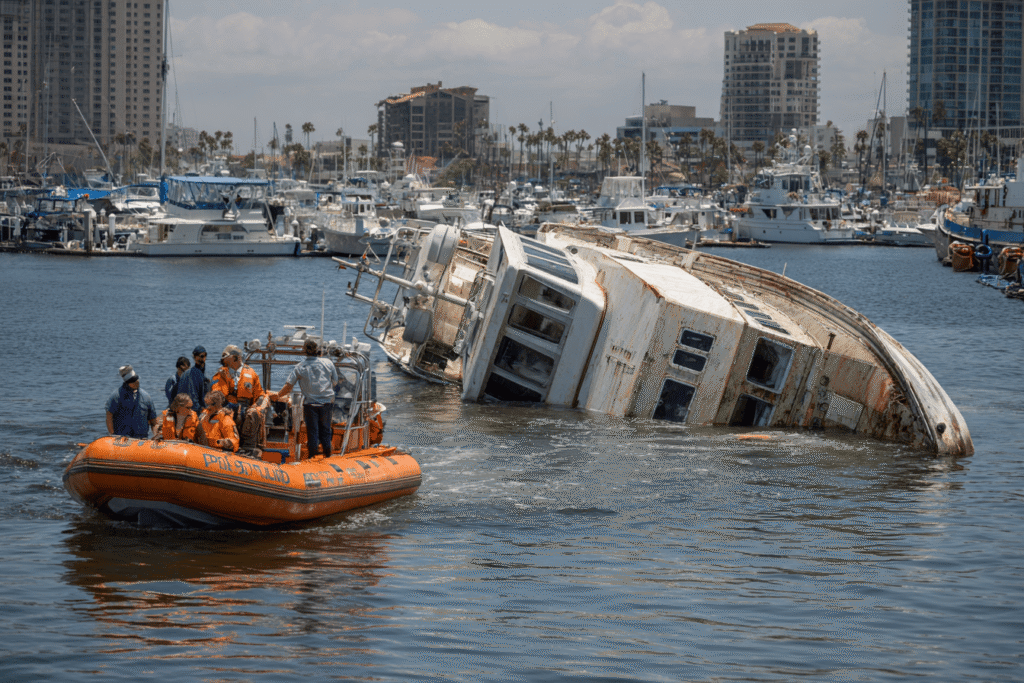
The first moments after experiencing a boat capsize are chaotic and dangerous. Cold water, panic, and confusion can quickly overwhelm even experienced boaters. People may be thrown into the water, separated from others, or trapped under the hull. Injuries and exhaustion can set in fast, especially in rough conditions or strong currents. Poor decisions in these first seconds can turn a survivable incident into a fatal one. Knowing what to do immediately can save lives.
The greatest danger after a capsize is panic and disorganization. Swimming away too soon, failing to account for everyone onboard, or ignoring visibility and flotation risks can make rescue far more difficult. Exposure, hypothermia, and drowning become real threats within minutes. Many boating fatalities happen not because of the capsize itself, but because of what happens right after.
In this article, you will discover what you should do first when a vessel capsizes, the critical steps that keep you safe in the water, and how a boating accident lawyer can help you seek compensation for damages.
What Should You Do First When a Vessel Capsizes?
The first thing you should do when a vessel capsizes is stay calm and do a headcount. A headcount means calling out each person’s name to make sure everyone is accounted for and safe.
Panic is your biggest enemy in this situation because it wastes energy and makes it hard to think clearly. These initial actions can save lives, so you need to act fast while staying focused.
What Do You Do in the First 60 Seconds?
The first minute after your boat flips over is the most dangerous time. You have four main jobs to do right away.
- Stay calm: Take deep breaths and resist the urge to panic, which burns oxygen and energy you need to survive.
- Do a headcount: Call out everyone’s name loudly and wait for them to answer back.
- Check for entrapment: Look quickly to see if anyone is stuck under the boat or caught in ropes.
- Get life jackets on: Make sure you and everyone else puts on a personal flotation device immediately.
What should you do first when a vessel capsizes? These basic survival steps are ones you can practice before you ever need them.
How Do You Do a Headcount and Get Life Jackets on Fast?
Call each person’s name in a loud, clear voice and wait for them to respond before moving to the next name. If someone doesn’t answer, look around quickly to spot them in the water.
Ask a strong swimmer to help children or injured people put on their life jackets first. Focus on non-swimmers and anyone who looks scared or is having trouble staying afloat.
Even when your hands are cold and shaking, work to make sure every strap and buckle is tight and secure. Your boat capsizes but remains afloat. What should you do? Keep everyone together in one group so no one drifts away.
How Do You Check for Injuries and Stabilize?
Once you know where everyone is, do a quick check for injuries. Look for obvious problems like bleeding, broken bones, or people who seem confused or dizzy.
Ask simple questions like “Are you hurt?” or “Can you move your arms?” to find injuries you can’t see. If someone is hurt, help them stay afloat and give basic first aid only if you know how and it’s safe to do so.
Don’t try to be a hero if you’re not trained in water rescue. Focus on keeping injured people stable until help arrives.
Should You Stay with the Boat or Swim for Shore?
You should stay with the boat unless it’s sinking completely or heading toward immediate danger, such as rocks or a waterfall. This might seem wrong, but staying with your capsized boat gives you a much better chance of being rescued.
Even a flipped-over boat is easier for rescuers to spot than people floating in the water. If your boat capsizes and floats away, you should still try to stay near it if possible.
How Do You Use the Hull for Flotation and Visibility?
Try to climb onto the overturned boat if you can do so safely. Getting your body out of the water helps you stay warmer and makes you much easier to see from the air or from other boats.
If you can’t climb on top, hold onto the side of the hull for support. The boat will help keep you afloat even when it’s upside down.
A capsized boat helps rescuers find you in several important ways:
- It’s a much bigger target than a person’s head in the water.
- It bounces radar signals back to search boats.
- It gives everyone a place to gather rather than spread out.
- It sits higher in the water than you do.
How Do You Conserve Heat and Energy in the Water?
If you have to stay in the water, use special positions to keep your body heat from escaping too fast. The HELP position means pulling your knees up to your chest and wrapping your arms around them to protect your core body temperature.
When you’re with other people, huddle together, arms around each other, to share warmth. The safest way to float if your boat capsizes is to move as little as possible.
Don’t tread water unless you absolutely have to, because it makes you lose heat and energy much faster than floating still.
How Do You Signal for Help Without Wasting Energy?
Signaling for rescue takes planning so you don’t waste energy on signals no one will see or hear. Save your strength for when you actually spot a potential rescuer, such as a boat or an airplane.
Random shouting and waving will just make you tired and cold faster.
What Visual and Sound Signals Should You Use?
Use different types of signals depending on what you have available and the kind of help you expect.
- Whistle: Blow three sharp blasts, which is the universal distress signal that carries much farther than your voice.
- Mirror or shiny object: Aim reflective surfaces toward the sun to flash light at boats or aircraft.
- Bright clothing: Wave colorful clothes or your life jacket over your head in a steady rhythm.
- Flares: Only use these when you’re sure a rescue boat is close enough to see them.
Rest between signaling attempts to save your energy for when it really counts.
When Should You Use EPIRB, PLB, and VHF Channel 16?
These are electronic devices that can call for help automatically or let you talk directly to rescuers.
An EPIRB is an Emergency Position Indicating Radio Beacon that’s registered to your specific boat. When you turn it on, it sends your exact location to satellites that alert the Coast Guard.
A PLB is a Personal Locator Beacon that works like an EPIRB but is smaller and belongs to you personally instead of the boat. Turn this on immediately if your life is in danger.
A VHF radio lets you talk directly to other boats and the Coast Guard on Channel 16. If you have a waterproof VHF radio, call “Mayday, Mayday, Mayday” and tell them where you are, what happened, and how many people need help.
These electronic signals give you the best chance of a fast rescue because they work even when you can’t see any other boats or planes.
Do These Steps Change on Lakes, Rivers, or Offshore?
Yes, you need to change your survival plan based on what type of water you’re in. The basic rules stay the same, but different places have different dangers.
What happens when a boat capsizes in a river with fast current is very different from an accident on a calm lake.
| Water Type | Main Dangers | What to Do Differently |
| Lakes | Cold water, other boats hard to see you | Stay with boat, watch for other vessels that might help |
| Rivers | Fast current, rocks and logs underwater | If swept away from boat, float on your back with feet downstream |
| Offshore | Very far from help, big waves | Turn on EPIRB right away, focus on saving energy for long wait |
How Do You Prevent a Boat from Capsizing?
Learning what to do after an accident is important, but preventing it from happening is always better. Most boat capsizing happens for reasons you can prevent.
What Causes a Boat to Capsize?
Most boats flip over because of mistakes that you can avoid with planning and care.
Overloading means putting too much weight or too many people on your boat, which makes it unstable and likely to tip over. Poor weight distribution occurs when you put too much weight on one side, causing the boat to lean dangerously.
Bad weather, such as sudden storms, high winds, and big waves, can easily flip a small boat that would be fine in calm conditions. Sharp turns at high speed make your boat more likely to capsize because the momentum throws everyone to one side.
Large wakes from passing boats can swamp a smaller vessel if the operator isn’t paying attention or isn’t properly handling the waves.
What Should You Check Before You Leave the Dock?
A simple safety check before you leave can prevent most capsizing accidents.
- Boat capacity: Make sure you don’t exceed the weight limit or carry too many passengers.
- Weather forecast: Check for storm warnings, high-wind advisories, or rough-water conditions.
- Safety equipment: Confirm all life jackets, flares, and radios are on board and working.
- Passenger briefing: Show everyone where the safety gear is and what to do in an emergency.
- Float plan: Tell someone on shore where you’re going and when you’ll be back.
What should you do to avoid colliding with another boat is maintain a proper lookout and follow navigation rules, especially in busy areas with lots of boat traffic.
What Should You Do After You Are Safe?
What you do after being rescued matters a lot for your health and your legal rights. As maritime attorneys, we see how the right steps after an accident can protect people who were hurt through no fault of their own.
How Do You Document the Incident and File Reports?
Taking pictures and writing down what happened creates a record that protects you later. Use your phone or camera to photograph the capsized boat, any visible injuries, and damaged safety equipment.
Get the names and phone numbers of everyone who witnessed the accident, including people on other boats. Write down everything you remember about the accident while it’s still fresh in your mind, including the time, weather conditions, and what caused the boat to flip.
The Coast Guard requires you to file an accident report within specific time limits, and maritime law has different rules than regular land accidents.
Why Should You See a Doctor Right Away?
Getting medical attention immediately is important for your health and for any legal case you might have. The adrenaline from a scary accident can hide serious injuries like concussions or internal bleeding that you don’t feel right away.
Medical records also create proof that links your injuries directly to the boat accident. Some symptoms from cold water exposure or trauma don’t show up until hours or days later.
Who Might Be Responsible and How Do You Save Evidence?
Several different people or companies could be legally responsible for your accident, depending on what caused it. Another boat operator might be liable if their wake caused your boat to capsize, or a charter company could be responsible if they failed to maintain their vessel properly.
Equipment manufacturers can be held responsible if defective life jackets, radios, or other safety gear didn’t work when you needed it. Never sign any papers from insurance companies or give recorded statements without talking to a maritime lawyer first.
Find Out How Much Your Capsizing Case is Worth
If you were injured when your boat capsized, you might be entitled to money for your medical bills, lost wages, and pain and suffering. The Law Offices of Charles D. Naylor has over 50 years of experience helping injured maritime workers and passengers in Long Beach and throughout Southern California.
We understand the complex laws governing water accidents, including the Jones Act for seamen and the Longshore and Harbor Workers’ Compensation Act for dock workers. These maritime laws often provide better protection than regular personal injury laws.
Contact us for a free consultation to learn about your rights and how we can fight for the compensation you deserve.
Frequently Asked Questions
What if Someone is Trapped Under the Hull?
If you think someone is stuck under the overturned boat, only one strong swimmer should take a deep breath and quickly check underneath while others watch them. Never risk your own life or put others in more danger by attempting a rescue you’re not trained for.
When Should You Leave the Boat Behind?
You should only abandon your capsized boat if it’s actively sinking, on fire, or drifting toward an immediate danger like a dam or sharp rocks. Even a partially sunk boat gives you better survival chances than swimming alone in open water.
How Long Can You Live in Cold Water?
Your survival time in cold water depends on the temperature and whether you’re wearing a life jacket, but it’s always much shorter than you think. In water below 60 degrees, you might only have 15 to 45 minutes before you lose consciousness, which is why getting onto the hull is so critical.
Do You Have to File a Coast Guard Report?
Yes, federal law requires you to file a boating accident report with the Coast Guard within 48 hours if someone dies or needs medical treatment beyond basic first aid. You have 10 days to report property damage or incidents with property damage over $2,000 or the total loss of the boat.
Who is Liable if Another Boat’s Wake Capsized Your Vessel?
Boat operators are legally responsible for any damage their wake causes to other vessels. If another boat’s wake flipped your boat and caused injuries, that operator can be held liable under maritime negligence laws for your medical bills and other damages.
What Deadlines Apply to Maritime Injury Claims?
Maritime law has strict time limits for filing injury claims, which differ from those in regular accident cases. You generally have three years for Jones Act claims but only one year for some other maritime injury cases, so you need to contact a maritime attorney immediately after your accident.