Hurt at the Port of Los Angeles? Contact a Port of Los Angeles accident attorney who fights for full maritime injury compensation.
Working at the Port of Los Angeles means navigating one of the world’s busiest maritime complexes, from the container terminals of Terminal Island to the cruise berths at San Pedro. When an accident happens here, you face more than physical recovery. You are dealing with federal maritime laws, corporate insurance adjusters, and strict filing deadlines that can cost you your entire claim if missed.
Our maritime injury attorneys at The Law Offices of Charles D. Naylor understand what you are up against when it comes to port injury cases. We know the difference between a longshore claim and a Jones Act case. We know which terminals preserve their CCTV footage and for how long. We know how to document a crane accident versus a mooring line injury. With over 50 years of maritime law experience from our Long Beach office near Terminal Island, we get injured port workers the full compensation they need to move forward.
Contact us to schedule a free consultation and discover how a Port of Los Angeles accident attorney can help you seek the compensation and justice you deserve.
How the Law Offices of Charles D. Naylor Helps Injured Workers and Passengers at POLA
The Law Offices of Charles D. Naylor represents injured longshore workers, seamen, port truckers, and cruise passengers hurt at the Port of Los Angeles. Our Long Beach office is located near Terminal Island and the World Cruise Center, and we focus exclusively on maritime law.
We handle the legal process so you can focus on getting better and getting back to work. From the moment you call us, we get to work on your behalf:
- Investigation: We secure terminal CCTV footage, crane camera recordings, and crew statements before they are deleted or overwritten.
- Medical coordination: We connect you with doctors experienced in maritime injuries so your treatment is documented in a way that supports your claim.
- Insurance handling: We take over all communication with adjusters so you stop receiving calls while you are trying to heal.
- Full recovery strategy: We pursue every available claim under the Jones Act, the Longshore and Harbor Workers’ Compensation Act, and general maritime law.
Why You Need a Specialized Port of Los Angeles Accident Attorney
A port accident is not a standard personal injury case. The laws that apply at the Port of Los Angeles are a mix of federal maritime statutes and California law, and filing under the wrong one can cost you your entire claim.
- Multiple liable parties: Terminal operators, vessel owners, stevedores, and equipment manufacturers can all share fault in a single accident.
- Short deadlines: Longshore workers have just 30 days to give written notice of an injury, and cruise passengers often have only six months under their ticket contract.
- Insurance tactics: Corporate insurers move fast to offer low settlements before you understand the full cost of your medical care and lost income.
The Law Offices of Charles D. Naylor holds an AV Preeminent rating from Martindale-Hubbell and has been repeatedly named a Southern California Super Lawyer. We know how to go up against large shipping companies and their insurers.
Who We Represent at the Port of Los Angeles
Your job title and location at the time of your accident determine which laws protect you. We represent all of the following:
- Longshore and harbor workers: Covered by the Longshore and Harbor Workers’ Compensation Act, a federal benefits system for dock and terminal workers.
- Seamen and vessel crew: You are protected by the Jones Act if you spend at least 30 percent of your working time aboard a vessel in navigation.
- Port truck drivers and yard hostlers: Eligible for California workers’ compensation and, in many cases, a separate third-party maritime claim.
- Cruise passengers: Protected by general maritime law if you were injured at the World Cruise Center at Berths 91 to 93 or aboard a ship sailing from Los Angeles.
What Accidents Happen at the Port of Los Angeles
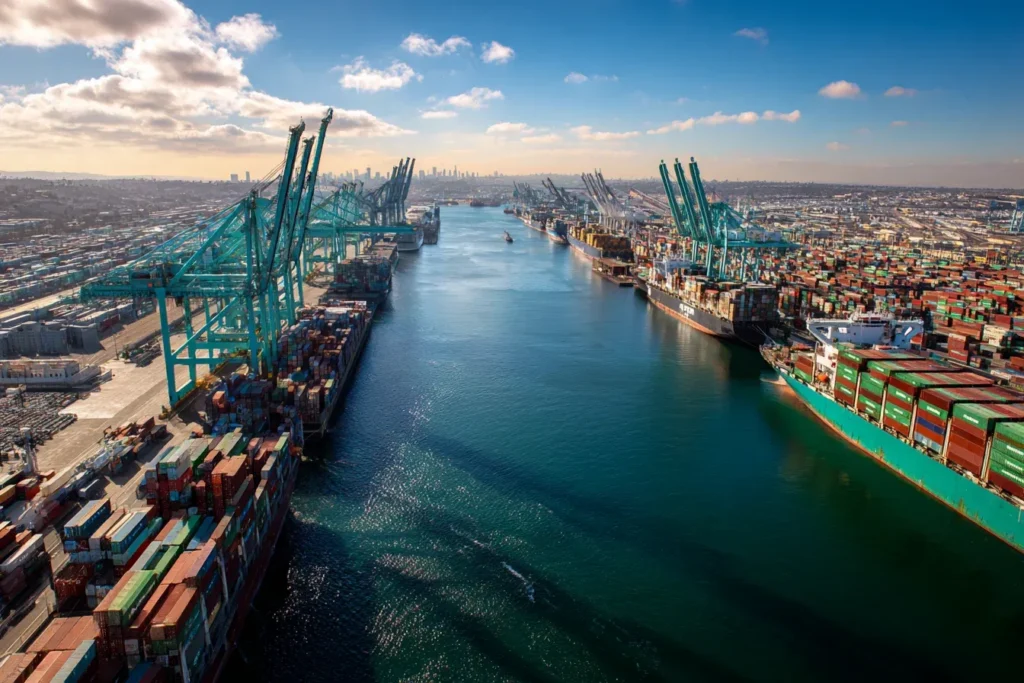
The Port of Los Angeles spans San Pedro, Wilmington, and Terminal Island. It includes container terminals, break bulk operations, shipyard repair docks, mooring stations, and cruise terminals. Accidents happen across all of these locations.
Common incidents include crane and cargo accidents, being struck by container loads, mooring line snapbacks, slip and falls on oily decks and wet gangways, yard equipment collisions, and cruise passenger injuries including slips, assaults, and onboard medical negligence.
These accidents cause some of the most serious injuries we see, including:
- Amputations and crush injuries
- Traumatic brain injuries and spinal cord damage
- Burns from fires and chemical exposure
- Severe back, shoulder, and soft tissue injuries
Who Is Liable for a Port of Los Angeles Accident
One of the first things we do is identify every party responsible for your injury. Depending on the facts of your case, liability may fall on one or more of the following:
- Terminal operators and stevedores: For unsafe working conditions or failure to follow safety protocols on shore.
- Vessel owners and operators: For unseaworthy ships, defective gangways, or negligent crew conduct.
- Equipment manufacturers: For defective cranes, chassis, or safety gear.
- Trucking and logistics companies: For collisions caused by their drivers or poorly maintained equipment on terminal grounds.
In one case involving a crane accident at a container terminal on Terminal Island, the crane operator suffered a traumatic shoulder injury when a load shifted during a lift. The terminal operator claimed the operator had failed to follow standard lift procedures. We obtained the crane’s computerized operations log, which showed the load rating had been exceeded on the order of the dispatch supervisor, not the operator. That record shifted liability entirely away from our client.
Many longshore workers covered by the LHWCA can pursue both no-fault benefits from their employer and a separate third-party lawsuit. This includes a Section 905(b) claim, which is a longshore worker’s right under federal law to sue a vessel owner for negligence aboard the ship.
What Compensation Can You Recover
The compensation available to you depends on which laws apply. LHWCA benefits cover medical treatment and a portion of your lost wages. Jones Act and third-party claims can recover far more, including pain and suffering damages that are not available under the LHWCA alone.
| Recovery Type | LHWCA Benefits | Jones Act and Third-Party Claims |
| Medical treatment | Fully covered | Fully covered |
| Lost wages | Two-thirds of average weekly wage | Full past and future earnings |
| Pain and suffering | Not available | Available |
| Vocational rehabilitation | Available | Case by case |
| Death benefits | Available to family | Wrongful death damages available |
If a worker is killed at the port, the Law Offices of Charles D. Naylor can pursue a wrongful death claim on behalf of surviving family members.
What Laws Apply to Your Port of Los Angeles Injury
Maritime law is made up of several overlapping federal statutes. The one that applies to your case depends on your role, your location, and the circumstances of your accident.
- Jones Act: Allows qualifying seamen to sue their employers directly for negligence.
- Longshore and Harbor Workers’ Compensation Act (LHWCA): A federal no-fault benefits system for injured dock and terminal workers.
- Section 905(b): Allows an injured longshore worker to file a separate negligence lawsuit against a vessel owner.
- General Maritime Law: Covers passengers, recreational boaters, and injuries not addressed by a specific federal statute.
- Death on the High Seas Act (DOHSA): Applies to wrongful death claims for fatalities that occur more than three nautical miles from shore.
What To Do After a Port of Los Angeles Accident
The actions you take in the hours and days after your accident can protect or hurt your claim. Follow these steps.
Step 1: Get Medical Care and Report the Injury
Get treatment right away and tell the doctor exactly how you were injured. Report the accident in writing to your supervisor, the terminal, or the Port Police, depending on where it happened.
Step 2: Preserve Evidence and Identify Witnesses
Photograph the scene and your injuries if you are able. Write down the names and contact information of any coworkers or bystanders who saw what happened. We send immediate evidence preservation demands to terminals and vessel operators to prevent CCTV footage, crane camera recordings, and maintenance logs from being erased.
Step 3: Avoid Recorded Statements and Broad Releases
Do not give a recorded statement to any insurance adjuster before speaking with an attorney. Signing a broad medical release gives the insurance company access to years of unrelated medical history, which they can use to dispute your current injury.
Step 4: Call a Port of Los Angeles Accident Attorney
Contacting an attorney quickly helps lock down evidence and ensures you meet the strict deadlines that apply to maritime claims. Call the Law Offices of Charles D. Naylor for a free case review.
Why Choose the Law Offices of Charles D. Naylor
Charles D. Naylor has practiced maritime injury law for more than 50 years in state and federal courts throughout Southern California. He also serves as an adjunct professor of Admiralty and Maritime Law at Chapman University School of Law, which means the knowledge he brings to your case is the same knowledge he teaches to the next generation of maritime lawyers.
One detail that affects nearly every Port of Los Angeles accident case is the speed at which terminal operators overwrite CCTV footage. Most major terminals on Terminal Island and in San Pedro retain footage for 30 to 72 hours before overwriting. We send evidence preservation letters within hours of being retained specifically to stop that process, and we have avoided losing critical footage in multiple cases by acting within the first day.
- Exclusive maritime focus: We do not divide our attention across different areas of law. Maritime injury is all we do.
- Local presence: Our Long Beach office is close to all terminals, shipyards, and cruise berths at POLA and the Port of Long Beach.
- Recognized nationally: AV Preeminent rated, Super Lawyers listed, and honored by Best Lawyers for excellence in admiralty and maritime law.
- No fee unless we win: You pay nothing upfront. We only get paid when we recover compensation for you.
Our results include significant jury awards and settlements for longshore workers and cruise passengers in cases involving wrongful death, amputation, and emergency medical evacuations.
Frequently Asked Questions
Can a Longshore Worker Choose Their Own Doctor Under the LHWCA?
Yes, the LHWCA generally gives you the right to choose your own treating physician, with your employer’s approval. We help our clients select doctors who are experienced in treating and documenting maritime injuries.
How Quickly Must a Longshore Worker Report an Injury at the Port?
You must give written notice to your employer within 30 days of your injury to preserve your right to LHWCA benefits. Missing this deadline can result in the loss of your right to compensation.
Can a Longshore Worker Receive LHWCA Benefits and Still Sue a Vessel Owner?
Yes. Under Section 905(b), you can collect LHWCA benefits from your employer and file a separate negligence lawsuit against a vessel owner whose conduct contributed to your injury.
What If My Cruise Ticket Requires Me To File a Lawsuit in Miami?
We can still represent you. The Law Offices of Charles D. Naylor handles cases in required venues by working with trusted local counsel in other states when necessary.
What Does It Cost To Hire the Law Offices of Charles D. Naylor?
There is no upfront cost. We work on a contingency fee basis, which means you pay no attorney fees unless we recover compensation for you.
Contact the Law Offices of Charles D. Naylor
If you were injured at the Port of Los Angeles, call the Law Offices of Charles D. Naylor at (310) 514-1200 or complete our online form to schedule a free, confidential case evaluation. We serve English and Spanish-speaking clients and are ready to help you today.