Hurt at the Port of San Diego? Contact a Port of San Diego accident attorney who fights for full maritime injury compensation.
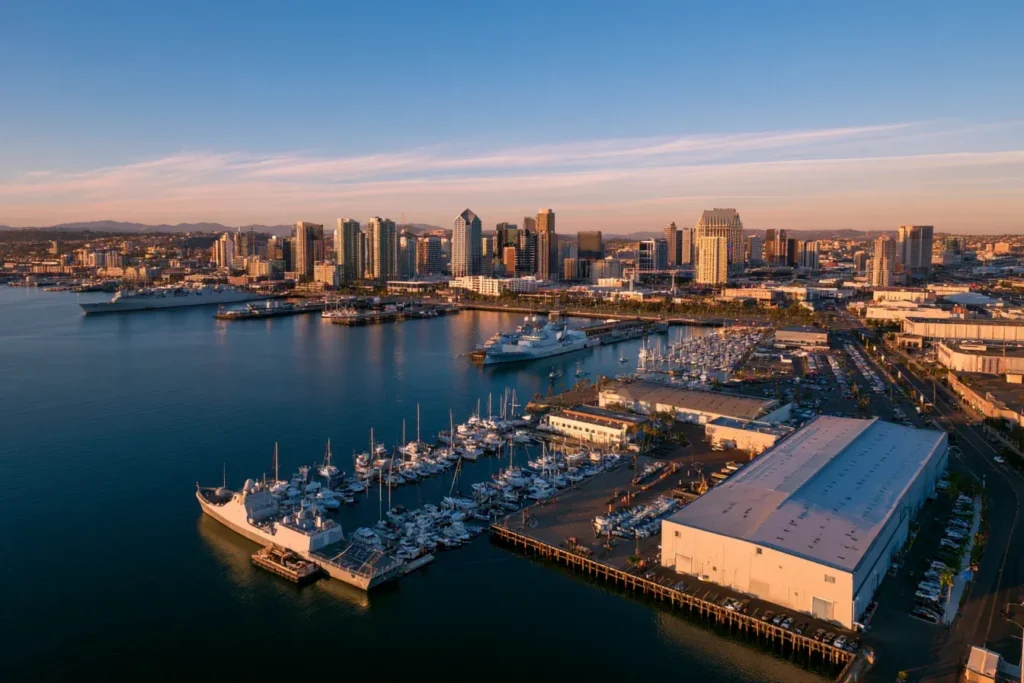
Every year, thousands of workers report to the Port of San Diego, operating cranes at the Tenth Avenue Marine Terminal, securing cargo at National City, or servicing vessels at the B Street cruise terminal. When heavy machinery meets tight deadlines and maritime operations, serious injuries follow. Insurance companies know injured port workers face tight deadlines and complex federal statutes, and they move quickly to take advantage of that.
Federal maritime law governs these accidents, not California workers’ compensation, and the difference matters. The Law Offices of Charles D. Naylor handles maritime injury claims throughout San Diego’s ports and knows which federal laws apply to your specific job, whether you are covered under the Longshore Act, the Jones Act, or general maritime law.
If you were hurt at the Port of San Diego, call (310) 514-1200 of contact us online to schedule a free consultation before you speak with any insurance adjuster.
How the Law Offices of Charles D. Naylor Helps After a Port of San Diego Accident
The Law Offices of Charles D. Naylor has represented injured maritime workers and passengers throughout California and beyond for over 50 years. We handle claims tied to the Tenth Avenue Marine Terminal, the National City Marine Terminal, and the B Street and Broadway cruise terminals.
Port injury cases involve federal maritime law, not standard California workers’ compensation rules. We take over the legal process so you can focus on getting medical treatment and getting back to work.
Call (310) 514-1200 to schedule a free case evaluation today.
Why Port of San Diego Accident Cases Require a Maritime Attorney
Port injury cases are more complicated than most workplace accidents. Multiple companies operate on the same dock, federal law controls your rights, and deadlines are far shorter than in standard personal injury cases.
- Overlapping federal laws: The Longshore and Harbor Workers’ Compensation Act, the Jones Act, and general maritime law each apply to different workers and provide different benefits.
- Multiple liable parties: Terminal operators, vessel owners, stevedoring contractors, and equipment manufacturers may all share fault for the same accident.
- Short filing deadlines: Some claims require that you provide written notice to your employer within 30 days of your injury.
- Insurer pressure: Adjusters often contact injured workers within hours to collect recorded statements and push low settlement offers.
What Accidents at the Port of San Diego Lead to Claims?
The Port of San Diego supports cargo operations, a major naval fleet, and hundreds of cruise ship calls every year. That level of activity creates serious hazards for workers and passengers.
Common accidents that lead to maritime injury claims include:
- Crane, top-handler, and forklift strikes
- Falls on wet or oily decks, piers, and gangways
- Cargo handling and lashing injuries
- Tug, barge, and snapping line incidents
- Struck-by accidents involving terminal vehicles and yard equipment
- Shipboard hazards while a vessel is moored at the port
- Pier and walkway defects
- Cruise terminal slip and fall injuries
What Laws Apply to Port of San Diego Injuries?
The law that covers your injury depends on your job and exactly where the accident happened. We identify which federal statutes apply so you pursue the right claim from the start.
| Law | Who It Covers | What It Provides |
| Longshore and Harbor Workers’ Compensation Act | Shore-based port, terminal, and shipyard workers | No-fault medical care, wage benefits, disability awards, and death benefits |
| Jones Act | Crew members assigned to a vessel in navigation | Right to sue an employer for negligence and recover full damages |
| General Maritime Law | Seamen injured by an unseaworthy vessel | Claim against the vessel owner |
| Section 905(b) | LHWCA workers hurt by vessel negligence | Third-party claim against the vessel owner |
Who Is Covered Under the Longshore Act and What Benefits Can You Receive?
The Longshore and Harbor Workers’ Compensation Act, commonly called the LHWCA, is a federal law that protects shore-based maritime workers. Longshoremen, terminal employees, harbor workers, and shipyard workers at the Port of San Diego are typically covered.
The LHWCA is a no-fault system. You do not have to prove your employer was careless to receive benefits.
Covered workers can receive:
- Medical care: All reasonable and necessary treatment is covered, and you have the right to choose your own doctor.
- Wage replacement: You receive two-thirds of your average weekly wage while you are unable to work.
- Permanent disability: Financial awards are available based on the severity of your physical impairment.
- Vocational rehabilitation: Retraining assistance is available if your injuries prevent you from returning to your previous job.
- Death benefits: Surviving spouses and dependent children receive financial support.
Not sure whether you qualify? Call (310) 514-1200 for a free review of your situation.
Do Jones Act and 905(b) Claims Apply to Your Case?
If you work as a crew member on a vessel, the Jones Act may protect you. A seaman is a worker who is permanently assigned to a vessel in navigation. A deckhand injured on a tugboat moving through San Diego Bay, for example, would file a Jones Act claim rather than an LHWCA claim.
If you are a shore-based worker covered by the LHWCA, you may still have a separate claim against a vessel owner under Section 905(b) of the LHWCA. This applies when a ship’s crew creates a hazard that injures a longshore worker, such as leaving an oil spill on a deck where cargo loading is taking place.
These two types of claims are not mutually exclusive. We analyze your specific situation to identify every avenue of recovery available to you.
Who May Be Liable for a Port of San Diego Accident?
More than one company often shares responsibility for a port accident, and identifying every liable party directly affects how much compensation you can recover. Receiving LHWCA benefits from your employer does not prevent you from filing third-party claims against other negligent parties.
Liable parties may include:
- Terminal and marine terminal operators
- Vessel owners and charterers
- Stevedoring and lashing contractors
- Equipment and parts manufacturers
- Port trucking and chassis providers
- Public entities in limited dangerous-condition claims
What we see consistently in Port of San Diego maritime injury claims is that the presence of the U.S. Navy’s Pacific Fleet alongside commercial port operations creates a complex liability environment that most general practice attorneys are not prepared to navigate.
When an accident occurs in a shared-use waterway or near a naval installation, questions about federal agency immunity and the precise boundary between civilian and military jurisdiction arise immediately.
We identify the applicable legal framework in the first week of every case, because filing under the wrong statute can result in a claim being dismissed entirely.
What Compensation Can You Recover After a Port of San Diego Accident?
The compensation available to you depends on which laws apply to your accident. LHWCA benefits provide immediate support for medical bills and lost wages, but third-party lawsuits and Jones Act claims can recover a broader range of damages.
LHWCA benefits cover medical expenses, wage replacement, disability awards, vocational rehabilitation, and death benefits for families.
Jones Act and third-party claims can add full lost wages, future earning loss, all past and future medical costs, pain and suffering, loss of enjoyment of life, and in rare cases, punitive damages.
We build your case to pursue the maximum recovery available under every law that applies to your situation.
What Should You Do After a Port of San Diego Accident?
The steps you take immediately after an accident protect both your health and your legal rights.
Step 1: Get Medical Care and Give Written Notice
Seek treatment right away and report the injury to your employer in writing. The LHWCA requires written notice within 30 days of the accident. Any delay in reporting can be used to reduce or deny your benefits.
Step 2: Gather Evidence and Identify Witnesses
Take photos of the accident scene and your injuries if you are able. Write down the names of any coworkers or supervisors who were present. We send preservation letters immediately to secure terminal surveillance footage and vessel logs before they are deleted.
Step 3: Avoid Recorded Statements
Insurance adjusters are trained to use your own words against your claim. Do not give a recorded statement and do not sign any medical authorizations or settlement forms before speaking with our legal team.
Step 4: Call a Port of San Diego Accident Attorney
Early legal help locks in your evidence, stops adjuster pressure, and protects your right to wage benefits and medical care. We handle every communication with the insurance companies so you can focus on your treatment.
Call (310) 514-1200 before speaking to any adjuster.
“Working with Mr. Charles Naylor and George Jones was reassuring and highly professional. I definitely would like to thank them for their efforts, as well as (my paralegal) Gladis Morales.” – F.G., Cruise Injury Client
What Deadlines Apply to Port of San Diego Claims?
Missing a deadline can permanently end your right to compensation, even if your underlying claim is strong.
- LHWCA notice: Written notice to your employer is required within 30 days of your injury.
- LHWCA filing: You have one year to file your formal LHWCA claim.
- Jones Act and unseaworthiness: Under the Jones Act and for unseaworthiness claims, you have three years from the date of injury to file a lawsuit.
- Cruise passenger claims: Most cruise tickets require written notice within six months and a lawsuit filed within one year in a specific court.
- Public entity claims: California law may require a notice of claim within as little as six months.
Why Choose the Law Offices of Charles D. Naylor
Charles D. Naylor has practiced maritime injury law for more than 50 years in state and federal courts throughout Southern California, including the U.S. District Court for the Southern District of California in San Diego. He holds an AV Preeminent rating from Martindale-Hubbell, the highest professional and ethical rating available, and has been repeatedly named a Southern California Super Lawyer.
Our firm has secured:
- Jury award in a longshore wrongful death case
- Post-bankruptcy settlement in a related matter.
- Obtained an LHWCA settlement for a longshore worker who suffered an amputation.
- Settlement in a cruise ship slip-and-fall case
- We work on a contingency fee basis. You pay nothing upfront, and you owe us nothing unless we recover money for you.
“Charles Naylor and his staff are quick, brilliant and very persuasive no matter your side. He also has the unusual ability to keep you calm in all circumstances which is very important. In the end he delivers and more than you might expect. The best in maritime law that I’ve heard of and used! I owe him a thank you every month!” – JMK, Cruise Injury Client
Frequently Asked Questions About Port of San Diego Accident Claims
Do Port of San Diego Workers File Under the LHWCA or California Workers’ Compensation?
Most shore-based port workers file under the federal Longshore and Harbor Workers’ Compensation Act, not California workers’ compensation. The LHWCA generally provides broader benefits and applies to workers on or near navigable waters.
Can a Port of San Diego Worker Choose Their Own Doctor Under the LHWCA?
Yes. The LHWCA gives covered workers the right to select their own treating physician from the start of their claim.
Can a Port Truck Driver Classified as an Independent Contractor Still File a Maritime Claim?
Being labeled an independent contractor does not automatically eliminate your rights. Depending on your daily work and location, you may still qualify for LHWCA benefits or have a viable third-party claim against a terminal operator or vessel owner.
Can a Longshore Worker Sue a Vessel Owner Under Section 905(b) While Receiving LHWCA Benefits?
Yes. You can receive LHWCA benefits from your employer and simultaneously pursue a Section 905(b) negligence claim against a vessel owner if the ship’s crew contributed to your injury.
What Happens if a Cruise Passenger Is Injured at the B Street or Broadway Terminal?
Cruise passengers injured at Port of San Diego terminals may have claims under general maritime law, but the cruise ticket contract typically controls where and when you must file. Most tickets require written notice within six months and a lawsuit within one year.
Contact the Law Offices of Charles D. Naylor
The Law Offices of Charles D. Naylor represents injured maritime workers and passengers throughout the Port of San Diego region. Your consultation is completely free, and you pay no attorney fees unless we win your case.
Call (310) 514-1200 today to speak with an experienced Port of San Diego accident attorney.